
Our commitment to biodiversity enhancement underpins every stage of Pennyfarthing Homes’ decision-making process, beginning at the earliest concept stage of a new scheme. From the outset, we challenge ourselves to address constraints and positively identify every opportunity within the plans and landscaping to bring nature in. Ecological considerations are integrated from the very beginning, ensuring biodiversity is actively designed in long before any construction commences.
Ecology first
Every Pennyfarthing development begins with a comprehensive ecological survey, carried out by qualified ecologists who assess flora, fauna, invertebrates, mammals, reptiles and amphibians to build a clear understanding of the existing ecosystem on site. This baseline knowledge informs a design-led approach that ensures we achieve, at a minimum, a 10% net gain in biodiversity.
As a housebuilder rooted in the New Forest, we are deeply committed to both protecting existing habitats and creating new ones, ensuring that development and nature can coexist and thrive.
Supporting native wildlife
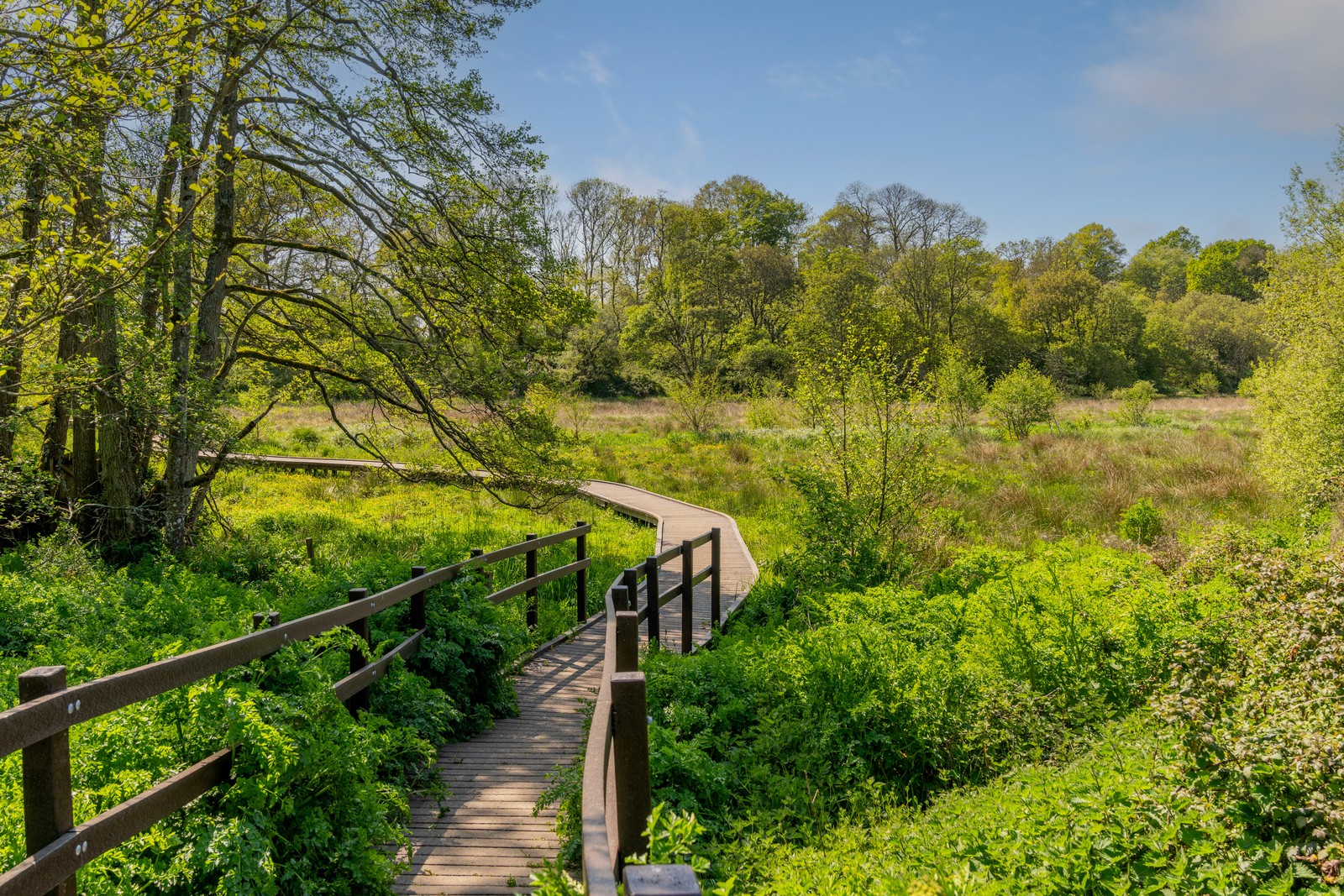
New landscaping across each of our developments is carefully designed and purposefully integrated. Native species such as holly, hawthorn, blackthorn, dog rose, native crab apple, honeysuckle, alongside extensive wildflower meadows, are selected to provide nesting cover, foraging opportunities and connected ecological corridors across our sites. In turn, these habitats support a rich supply of nectar, berries, fruit and other food sources, sustaining pollinators, insects and wider local wildlife.
This ecological thinking extends seamlessly into the built environment. Bat and bird boxes are incorporated into Pennyfarthing homes and positioned within trees to provide secure artificial roosting spaces, while bee bricks are built into properties to support solitary species, such as masonry bees. Hedgehog highways connect private gardens to enable safe movement across developments, and unlit perimeter corridors are designed to create dark, uninterrupted routes for bats. Together, these features help protect, strengthen and enhance the local ecosystem as an integral part of each development.
Biodiversity net gain
So, how can we measure and maintain our results? As an example, at Danes Park in New Milton, our biodiversity enhancements have been independently measured. We created an 11% overall increase in habitat, a 24% increase in hedgerow and a 91% increase in river habitat driven by the attenuation ponds. All of this is sited across more than 11.5 acres of newly created public green space.
What’s more, an approved Landscape Ecology Management Plan governs the ongoing maintenance of those net gains, whilst our financial contribution to the local council funds independent ecological monitoring, ensuring that all our targets are met.
More resilient, connected ecosystems support pollinators, improve water quality, enhance soil health and contribute to natural flood management; all of which are essential benefits for the communities who live in and around our developments. Biodiversity enhancement is therefore not an afterthought, but a fundamental consideration from initial concept through to delivery, and well into the long-term future.
We are committed to helping create a healthier environment for both our residents and the planet. Investing in biodiversity today delivers lasting value, and we are proud to play our part in shaping a more sustainable future through a new generation of homes at Pennyfarthing.